
Solar power plants in South Africa
Africa's most mature solar market: utility-scale wheeling projects, C&I rooftop systems against load shedding, and a clear registration framework.
Market overview
South Africa has the largest installed solar capacity on the continent and the most experienced ecosystem of developers, banks and contractors. Years of load shedding have created strong demand for self-generation, and the 2022 removal of the licensing threshold for private generation opened the door for utility-scale private projects that wheel power across the Eskom grid to industrial customers.
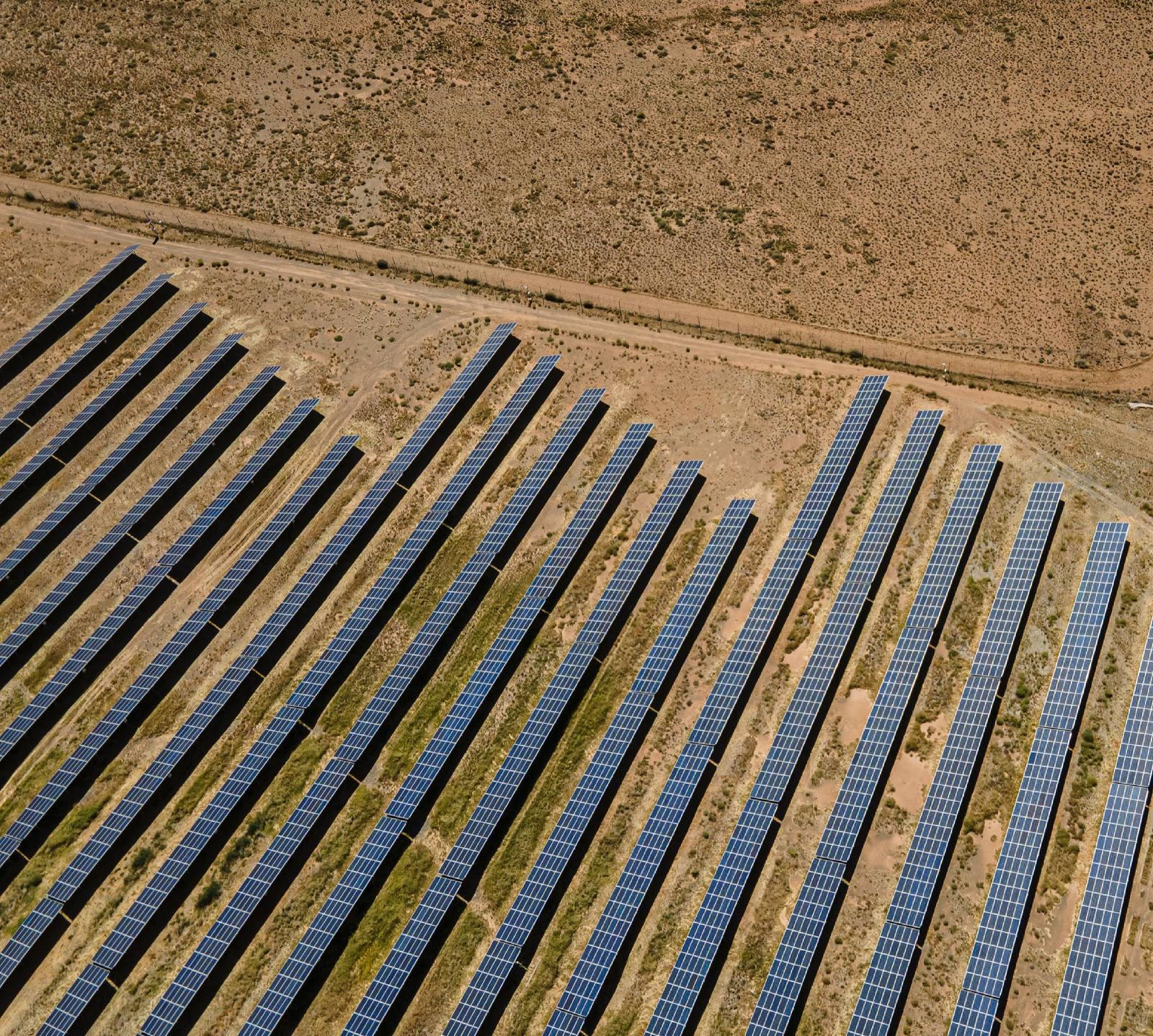
The aerial photo on our solar park page shows De Aar in the Northern Cape, one of the regions with the best irradiation in the world and the heart of South Africa's utility-scale solar industry.
- Regulator
- NERSA (National Energy Regulator of South Africa)
- Grid operator
- Eskom (transmission, large parts of distribution), municipalities (local distribution)
- Installed solar
- Roughly 7 GW (2024), of which about 5.8 GW rooftop
- Irradiation
- About 1,900 to 2,300 kWh/m² per year, highest in the Northern Cape
- Procurement
- REIPPPP bid rounds, private PPAs and wheeling
Market situation
- Private wheeling projects in the hundreds of megawatts, often combined with battery storage
- Grid capacity is scarce in the Northern and Western Cape; new capacity is sought in the Free State, North West and Mpumalanga
- Strong C&I demand from mining, manufacturing, retail and agriculture
- Municipal SSEG programmes with differing rules and tariffs per city
Permits and grid connection
- Grid-connected systems below 100 kVA: registration with Eskom or the municipality
- 100 kW and above: registration directly with NERSA; no generation licence for own use
- Inverters must comply with NRS 097-2-1, installations need a Certificate of Compliance
- Utility-scale: grid connection application and cost estimate letter from Eskom, grid code compliance tests, environmental authorisation
What we build here
- Ground-mounted solar parks for IPPs and wheeling projects, with or without BESS
- Rooftop and carport systems for factories, mines, shopping centres and farms
- Residential hybrid systems with backup for load shedding
Frequently asked questions
Do I need a licence for a solar plant in South Africa?
For generation for own use, no licence is required since 2022. Grid-connected systems must be registered: below 100 kVA with Eskom or the municipality, from 100 kW directly with NERSA. Selling electricity to third parties may require a trading licence.
What is wheeling?
Wheeling means a private solar park feeds into the Eskom or municipal grid and a customer elsewhere consumes the power under a PPA, paying a use-of-system charge to the grid operator. It allows large plants to be built where land and grid capacity are available, not where the customer is.
How long does grid connection take?
For rooftop systems, registration and approval typically take a few weeks to months depending on the municipality. For utility-scale projects, the Eskom grid connection process including cost estimate, budget quote and grid studies usually takes well over a year and should start before detailed design.
Regulatory details change. Figures and rules on this page reflect our research as of October 2026 and are verified for every project.
Planning a project in South Africa?
Send us the location, the area and the planned capacity. We reply with a first assessment.